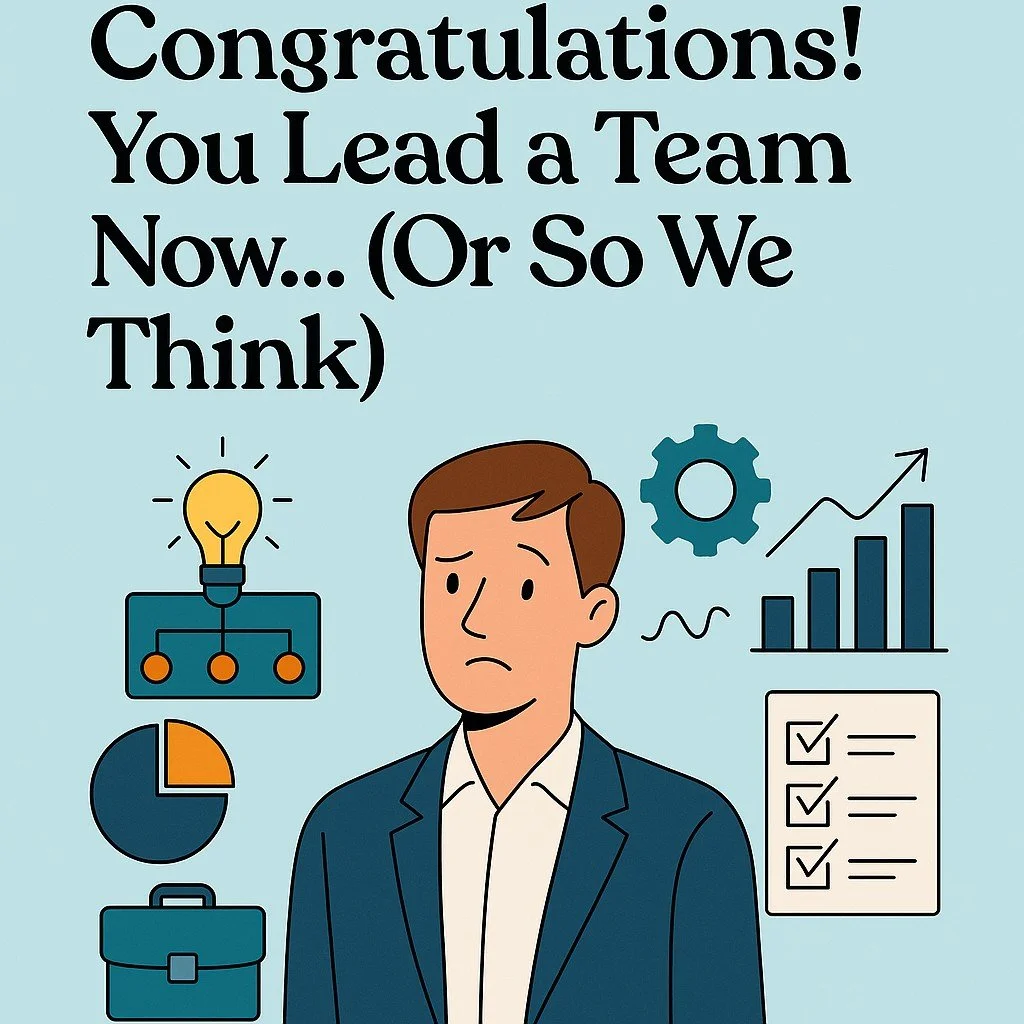
Congratulations! You Lead a Team Now… (Or So We Think)
Promotions in fast-growing companies don’t always happen because someone is ready — sometimes they just happen because someone is there. Let’s talk about the “accidental manager,” and why it’s time to address the problem openly.
Promotions are supposed to be intentional.
Earned. Thought-through. The result of growth, skill, performance, and readiness.
But if you’ve spent any time in a fast-growing company, you know that’s not always how it goes.
Sometimes someone gets promoted simply because… well, they were there.
There was a gap. A fire. A sudden resignation. A team doubling overnight.
And voilà — without discussion, training, alignment, or even clarity:
“Congratulations! You lead a team now… (or so we think).”
Welcome to the world of accidental promotions.
How it happens (and why no one likes to admit it)
It usually goes something like this:
The company grows faster than expected
Everyone’s too busy with “day to day” to think long-term
A team needs a manager immediately
Someone says, “They’ve been here a while, right?”
Boom — leadership title unlocked
No assessment.
No training.
No leadership skills.
No clue what the job actually involves.
Just survival.
And survival is not the same as leadership.
The hidden cost of accidental managers
The consequences show up slowly:
1. Actual performers start doing the manager’s job
Because someone has to.
And it’s usually the person who cares the most.
2. The accidental manager gets overwhelmed
They’re not bad people — they’re unprepared.
And deep down, they know it.
3. The team loses trust
Because expectations aren’t clear.
Decisions aren’t consistent.
And feedback rarely happens.
4. Leadership layers become messy
Who owns what?
Who decides what?
Who do people go to?
Everyone has a different answer.
5. Culture becomes reactive instead of intentional
People stop challenging decisions.
They start micro-managing or disconnecting.
And nobody really knows where the bar is.
Important note: This is rarely anyone’s fault.
(but that doesn’t mean noone is responsible)
Fast-growing companies don’t create accidental managers because they want to.
They do it because:
they don’t have frameworks yet
they don’t have time
they don’t want to slow down
they assume people will “just figure it out”
People are promoted out of necessity — not readiness.
And that’s where People & Culture comes in.
What great companies do differently
Smart organizations don’t wait for these issues to explode.
They build systems that prevent them:
1. Clear leadership expectations
Not vague.
Not “just be proactive.”
Actual behaviours. Actual standards.
2. Assessing readiness before promoting
Skills before seniority.
Capability before convenience.
3. Training people early — way before they manage
Leadership is a skill.
It needs practice, not panic.
4. Creating pathways for growth without titles
People can grow without managing others.
5. Fixing misalignment openly
Sometimes the bravest thing a company can do is say:
“This isn’t the right role for you right now — and that’s okay.”
6. Making promotions intentional, not reactive
Deliberate.
Transparent.
Earned.
Scalable.
Why this matters so much in scale-ups
Because in a scaling company:
Every misalignment compounds
Every unclear expectation spreads
Every accidental promotion creates confusion
And every leadership gap slows growth
People perform best when they know what’s expected, who owns what, and how success is measured.
Clarity is not a luxury; It’s a growth strategy.
My belief as a People & Culture leader
Promotions should empower people — not set them up to survive.
When we make them intentional, honest, and grounded in real capability, everyone wins:
Teams trust their leaders
Leaders grow with confidence
Culture becomes stronger
The business scales sustainably
And most importantly:
People feel safe to do the work they’re actually good at.